
Abstract
This comprehensive guide examines the multifaceted process of selecting durable and effective reflective road studs in the context of 2025's global infrastructure demands. It provides a detailed analysis of the material science, photometric properties, and technological variations that define modern road delineation systems. The discourse moves beyond a superficial product comparison to a deeper inquiry into the foundational principles of road safety, considering the psychological impact of guidance systems on drivers in adverse conditions. The article scrutinizes the role of international standards, such as EN 1463 and ASTM D4280, in ensuring product quality and interoperability. It contrasts passive retroreflective technologies with active, solar-powered illumination, evaluating their respective applications, benefits, and limitations. A central theme is the necessity of a holistic assessment that encompasses not only the initial procurement cost but also the total cost of ownership, including installation, maintenance, and the quantifiable value of accident reduction. The analysis is tailored to diverse climatic and regulatory environments, offering specific guidance for markets in South America, Russia, the Middle East, and Southeast Asia.
Key Takeaways
- Material choice—plastic, glass, or aluminum—directly impacts durability in your specific climate.
- Verify compliance with international standards like EN 1463 to guarantee photometric performance.
- Solar road studs offer superior visibility in poor weather but require a higher initial investment.
- Proper installation with the correct adhesive is paramount for the longevity of any reflective road stud.
- Consider the total cost of ownership, not just the unit price, for a true cost-benefit analysis.
- Partner with a specialized supplier who offers technical support and proven quality control.
- Integrate studs with other safety products like solar traffic signs for a cohesive safety system.
Table of Contents
- The Foundational Role of Reflective Road Studs in Modern Traffic Management
- Point 1: Material Science and Durability—The Core of Longevity
- Point 2: Retroreflectivity and Photometric Performance
- Point 3: Compliance and Certification—Navigating Global Standards
- Point 4: Passive vs. Active Illumination—Choosing Your Technology
- Point 5: Installation and Maintenance—Ensuring Long-Term Efficacy
- Point 6: Cost-Benefit Analysis—An Investment in Human Life
- Point 7: Supplier Vetting—Finding a Partner, Not Just a Product
- Beyond the Stud: Integrating into a Holistic Road Safety Ecosystem
- Frequently Asked Questions (FAQ)
- A Final Reflection on Guiding Journeys Safely
- References
The Foundational Role of Reflective Road Studs in Modern Traffic Management
When we contemplate the vast network of roads that crisscross our continents, we often focus on the grand scale—the bridges that span impossible gulfs, the tunnels that pierce mountains, the sheer mileage of asphalt. Yet, the safety of any journey, particularly after the sun sets or when the heavens open, rests upon much smaller, humbler objects. The reflective road stud, often known by its evocative nickname, the road cat's eye, is one such object. Its function appears simple: to delineate a path in the darkness. A deeper examination reveals a complex interplay of physics, material science, and human psychology. These are not mere markers; they are silent sentinels, instruments of a profound ethical commitment to preserve human life on our shared roadways. Their presence or absence, their quality and placement, speaks volumes about a society's valuation of its citizens' well-being.
Beyond a Simple Marker: A Philosophical Inquiry into Road Delineation
To place a reflective road stud upon a road is to make a statement. It is an assertion that the path forward should be clear, that ambiguity in moments of high velocity and potential peril should be minimized. This act of delineation is a form of communication, a dialogue between the civil engineer and the unknown driver. The language is one of light. In the absence of daylight, the road loses its context. Kerbs, verges, and lane markings dissolve into a uniform blackness. The driver is cast into a state of heightened uncertainty, a condition that the human mind is ill-equipped to handle for sustained periods. The reflective road stud restores order to this chaos. It provides a series of predictable, reassuring points of light, allowing the driver's brain to construct a mental model of the road ahead. This is more than just guidance; it is a form of cognitive support, reducing mental load and freeing up cognitive resources to focus on other potential hazards. The moral dimension here is inescapable. To fail to provide such guidance where it is needed is to accept a higher probability of error, of confusion, of tragedy.
A Brief History: From Cat's Eyes to Solar-Powered Sentinels
The story of the reflective road stud begins with a moment of inspiration. In 1934, an English inventor named Percy Shaw was driving on a dark, winding road in Yorkshire. As the story goes, he was guided to safety by the light of his headlamps reflecting in the eyes of a cat sitting on a fence. This experience sparked an idea: a device that could be embedded in the road to artificially replicate this effect. His invention, the "Catseye," consisted of two pairs of retroreflective glass spheres set in a rubber housing, which was itself seated in a cast-iron base. When a vehicle drove over it, the rubber housing would compress, and a small rubber wiper would clean the glass spheres, ensuring their continued function. This self-cleaning mechanism was a stroke of genius and a key reason for the device's enduring success.
For decades, this passive design dominated. The technology relied entirely on the light from a vehicle's headlamps. The 21st century, however, brought a paradigm shift with the advent of affordable photovoltaics and light-emitting diodes (LEDs). This gave birth to the solar road stud. Instead of merely reflecting light, these devices could now generate their own. A small solar panel charges an internal battery or capacitor during the day, and at night, this stored energy powers bright LEDs. This transition from passive reflection to active illumination marked a significant leap in road safety technology, offering visibility from much greater distances and in conditions where headlamps are less effective, such as dense fog or heavy rain. Today, we stand at a point where both technologies coexist, each with its own set of advantages, forming a part of a diverse range of road safety solutions available to traffic engineers.
The Psychology of Night Driving: How Studs Guide the Human Brain
Driving at night is a fundamentally different cognitive task than driving during the day. Our peripheral vision is reduced, our ability to judge distances is compromised, and our perception of color is almost entirely lost. The brain must work harder to process a degraded stream of visual information. This is where the rhythmic pulse of light from road studs becomes so vital.
Neuroscientifically, the human visual system is highly attuned to patterns and motion. A line of evenly spaced road studs creates a phenomenon known as "optic flow." As we move forward, these points of light appear to stream past us, originating from a single point in the distance known as the focus of expansion. This flow provides powerful cues about our speed, our position within the lane, and the curvature of the road ahead. When the studs curve to the left, the optic flow pattern instinctively tells the brain to prepare for a leftward turn, long before the driver is consciously aware of the need to steer.
Furthermore, the flashing effect of an active solar road stud can be more effective at capturing a driver's attention than the steady glow of a passive reflector. This is due to the way our visual neurons respond to changes in luminance. A sudden flash triggers a stronger neural signal than a constant light source, a feature that is particularly useful for alerting drivers to upcoming hazards like intersections, crosswalks, or sharp bends. The choice of a reflective road stud, therefore, is not just an engineering decision; it is an intervention in the cognitive and perceptual experience of every driver who will travel that road.
Point 1: Material Science and Durability—The Core of Longevity
The effectiveness of a reflective road stud is nullified if it cannot withstand the brutal environment of the roadway. It is a world of immense compressive forces from multi-ton trucks, abrasive scraping from tires and debris, relentless thermal cycling from day to night, chemical assault from oil, fuel, and de-icing salts, and constant bombardment by ultraviolet (UV) radiation. The selection of a material is thus the first and perhaps most defining choice a buyer must make. It is a decision that must be informed by a deep understanding of the local climate and traffic conditions.
Plastic vs. Glass vs. Aluminum Alloy: A Comparative Analysis
The three most common families of materials used for road stud bodies are engineering plastics, tempered glass, and cast aluminum alloys. Each presents a unique profile of strengths and weaknesses. There is no single "best" material; there is only the "most appropriate" material for a given application.
| Feature | Engineering Plastic (e.g., PC, ABS) | Tempered Glass | Aluminum Alloy |
|---|---|---|---|
| Impact Resistance | High (can deform and recover) | Low (can shatter under sharp impact) | Very High (resists deformation) |
| Abrasion Resistance | Moderate to Good | Very High (resists scratching) | Good (can be powder-coated for extra protection) |
| Compression Strength | Good | Very High | Excellent |
| Cost | Low to Moderate | Moderate to High | High |
| Climate Suitability | Good for moderate climates; UV-stabilized grades are necessary. | Excellent for hot, sandy climates (resists abrasion). | Excellent for cold climates (resists snowplow damage). |
| Reflector Integration | Typically houses separate microprismatic reflectors. | The entire body can be the retroreflective element. | Houses separate reflectors, offering high protection. |
| Failure Mode | UV degradation, cracking, loss of reflector. | Catastrophic shatter. | Deformation, loss of reflector. |
Engineering plastics, such as polycarbonate (PC) or acrylonitrile butadiene styrene (ABS), offer an excellent balance of cost and performance. Their inherent flexibility allows them to absorb impacts without shattering, making them resilient on high-speed roads. However, their Achilles' heel is long-term UV exposure and abrasion. Without proper UV stabilizers mixed into the polymer, sunlight can make the plastic brittle over time. Sand and grit can also scratch the surface, degrading the performance of integrated reflectors. For this reason, they are often best suited for temperate climates without extreme sun or frequent sandstorms.
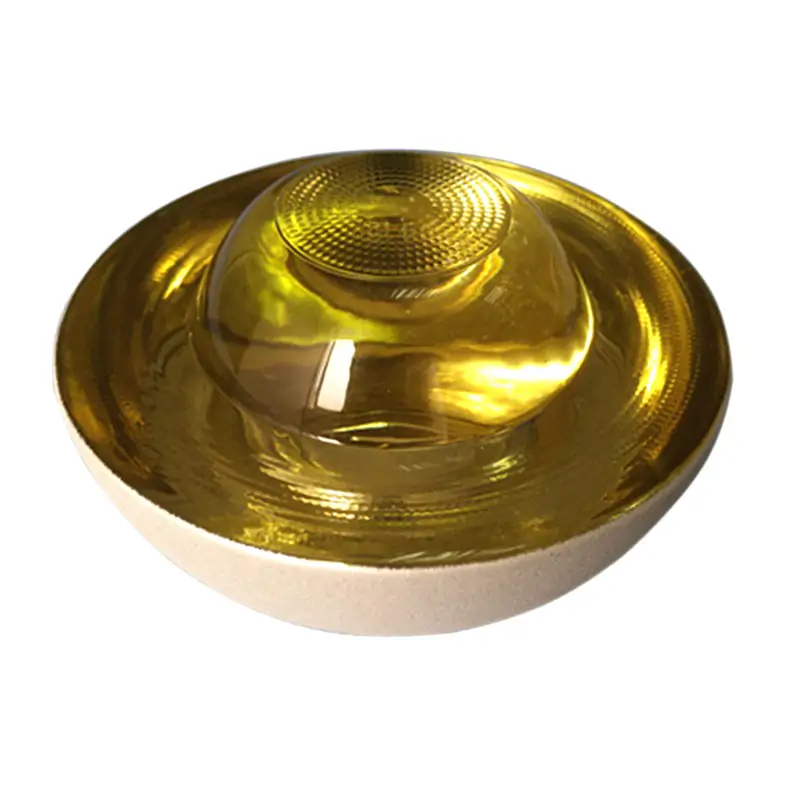
Tempered glass road studs represent a different philosophy. They offer exceptional hardness, which translates to superior long-term abrasion resistance. The retroreflective elements are often part of the glass itself, meaning their performance doesn't degrade from surface scratching in the same way plastic studs' might. This makes them an outstanding choice for regions with sandy or dusty conditions, such as the Middle East. Their primary vulnerability is direct, sharp impact. While they possess very high compressive strength, a sharp blow from an object like a dropped piece of metal cargo can cause them to shatter.
Aluminum alloy studs are the heavyweights of the road stud world. Their primary purpose is to provide maximum protection to the reflective elements housed within. They possess immense compressive and impact strength, making them the preferred choice in areas with heavy truck traffic and, most notably, in regions that use snowplows. A well-designed aluminum stud can withstand repeated impacts from a snowplow blade, an event that would destroy most plastic or glass studs. Their cost is higher, but in environments like the Russian winter, this upfront investment prevents the need for annual replacement, making them more economical in the long run.
Understanding Compression Strength for High-Traffic Zones
Imagine the force exerted by a fully loaded 40-ton truck. That entire weight is distributed through a few small contact patches—the tires. When a tire rolls directly over a road stud, the stud must withstand an immense crushing force. This ability to resist being crushed is known as compression strength, typically measured in tons or kilonewtons (kN).
For a road planner in a developing economy like those in parts of South America or Southeast Asia, where freight corridors are expanding rapidly, specifying a stud with adequate compression strength is non-negotiable. A stud with a low rating might be cheaper initially, but it will fail prematurely under the constant punishment of heavy goods vehicles. This leads to a cycle of frequent replacement, increased labor costs, and more frequent traffic disruptions.
A high-quality reflective road stud should have a compression strength rating well over 10 tons, with premium models designed for highways and ports exceeding 40 or even 60 tons. When evaluating a supplier, one should demand certified test reports for compression strength. This is not a specification to be taken on faith. A mental exercise: picture a stack of 20 family cars. A top-tier road stud must be able to support that weight without cracking or deforming. This is the level of engineering required for a device that measures only a few centimeters across.
Climate Considerations: Selecting for Extreme Heat and Cold
The global marketplace for road safety products spans a vast range of climates, and a one-size-fits-all approach is doomed to fail. A product that performs brilliantly in the temperate climate of Western Europe may fail within months in the scorching heat of a Dubai summer or the frigid depths of a Siberian winter.
Extreme Heat (e.g., Middle East, parts of South Africa): The primary challenges here are UV degradation and thermal expansion. Daytime surface temperatures on asphalt can exceed 80°C (176°F).
- Material Choice: UV-stabilized polycarbonate or ABS is a minimum requirement for plastic studs. The best choice is often tempered glass, as it is inert to UV radiation and its hardness resists the abrasive effect of windblown sand. Aluminum is also excellent, as the metal body protects the internal reflectors from both UV and abrasion.
- Adhesive: The adhesive used for installation is just as important. It must have a high softening point to prevent the stud from "swimming" or dislodging as the asphalt softens in the extreme heat. Epoxy-based adhesives are generally superior to bitumen-based ones in these conditions.
Extreme Cold (e.g., Russia, mountainous regions): Here, the main adversaries are snowplows and "frost heave," where water freezing in the roadbed can exert pressure and dislodge studs.
- Material Choice: Cast aluminum alloy is the undisputed champion in snowplow country. The stud body, often combined with a cast-iron "ramp" or "shoe" design, is engineered to deflect the plow blade up and over the reflective lens. Plastic and glass studs, unless specifically designed and installed in recessed grooves, have a very short life expectancy in these environments.
- Mechanical Properties: The material must resist becoming brittle at low temperatures. A plastic that is flexible at 20°C can become as fragile as glass at -40°C. Suppliers must provide data on their products' performance at low temperatures (Charpy impact strength testing).
- Installation: In addition to strong adhesives, mechanical anchoring with a shank or stem that is drilled into the road surface provides extra resistance against both plow blades and frost heave.
High Humidity and Rain (e.g., Southeast Asia, parts of South America): The challenge here is ensuring long-term adhesion and maintaining reflectivity when the road is wet.
- Adhesion: The road surface must be perfectly dry and clean before application. The humidity can interfere with the curing process of many adhesives. Using a moisture-tolerant primer can be a wise investment.
- Reflectivity: We will discuss this in more detail later, but for rainy conditions, studs that maintain high retroreflectivity in wet conditions are essential. Some designs incorporate features that help shed water from the reflective face.
Point 2: Retroreflectivity and Photometric Performance
A road stud can be made of the most durable material known to science, but if it does not effectively return light to the driver's eyes, it is merely a lump on the road. The optical performance, or photometry, of a reflective road stud is its entire reason for being. This requires an understanding of a peculiar and wonderful property of light called retroreflection.
The Physics of Retroreflection: How Light Returns to its Source
Think about what happens when you shine a flashlight at a mirror. The light bounces off at an angle equal to the angle it hit—the law of specular reflection. If you're not standing in just the right spot, you won't see the reflection. Now, think about shining that same flashlight at a bicycle reflector or a traffic sign. The light comes straight back to you, regardless of the angle at which you are holding the flashlight. This is retroreflection.
Retroreflective materials return incoming light rays back parallel to their original direction. How do they achieve this? The most common technology used in road studs is the microprismatic reflector. Imagine a solid piece of plastic covered in thousands of tiny, perfectly formed three-sided pyramids, like the corner of a cube. These are called corner cubes. When a ray of light enters the prism, it reflects off each of the three faces in sequence and is sent back exactly where it came from.
This is the technology at the heart of most modern passive reflective road studs. The efficiency of this process—the percentage of light that is successfully returned to the source—is a primary measure of a stud's quality. A high-quality reflector will appear intensely bright to a driver, even from hundreds of meters away, because it is concentrating almost all the returned light into a narrow cone directed back at the vehicle's headlamps. A poor-quality reflector will scatter the light, appearing dim and ineffective.
Decoding Photometric Standards: Lumens, Candelas, and MCD
When you begin to compare specification sheets for different road studs, you will enter the world of photometry and its specific vocabulary. It can be confusing, but the core concepts are straightforward.
- Lumen (lm): This measures the total amount of light emitted by a source in all directions. It's useful for things like light bulbs, but less so for road studs.
- Candela (cd): This measures luminous intensity, which is the amount of light emitted in a specific direction. This is much more relevant for road studs, as we only care about the light traveling back toward the driver.
- Coefficient of Luminous Intensity (CIL): This is the key metric for passive retroreflectors. It is expressed in millicandelas per lux (mcd/lx). In simple terms, it measures how bright the reflector appears (in mcd) for a given amount of light shining on it (in lux). A higher CIL value means a more efficient and brighter reflector.
International standards like EN 1463 in Europe and ASTM D4280 in the United States specify minimum CIL values for different colors (white, yellow, red, green, blue) at various observation and entrance angles. These angles simulate the real-world geometry of a car's headlamps illuminating a stud down the road and the light returning to the driver's eyes. When a manufacturer claims their product is "EN 1463 compliant," they are certifying that its photometric performance meets these minimum CIL values, as verified by an accredited laboratory. For a buyer, demanding these certified test reports is the only way to be sure you are not purchasing a product that is, optically speaking, substandard.
For active (solar) road studs, the metric is simpler: the luminous intensity of the LEDs, measured directly in candelas (cd) or millicandelas (mcd), as they produce their own light.
The Impact of Weather: Maintaining Visibility in Rain, Fog, and Dust
The performance of a reflective road stud in perfect, dry conditions is one thing. Its performance in the real world of rain, fog, and dust is quite another.
Rain: A layer of water over a standard retroreflector can be catastrophic for its performance. The water film disrupts the precise angles at which light enters and exits the microprisms, effectively turning the retroreflector into a simple mirror and scattering the light away from the driver. This is why painted road lines often disappear in the rain. High-quality road studs combat this in several ways:
- Raised Profile: The stud sits above the level of the road, so it is above any thin film of water.
- Hydrophobic Coatings: Special coatings can be applied to the reflector face that cause water to bead up and run off rather than forming a film.
- Advanced Optics: Some designs, particularly those meeting the highest classes of EN 1463 (like R3), are specifically engineered to maintain a high percentage of their dry-weather reflectivity even when wet.
Fog: In foggy conditions, a driver's headlamps create a wall of glare as the light scatters off the water droplets in the air. This significantly reduces the distance at which a passive reflective road stud can be seen. This is the single biggest advantage of the solar road stud. Because they generate their own light, they are not dependent on the driver's headlamps. Their bright, piercing LED light can penetrate the fog much more effectively, often being visible several hundred meters before a passive stud would even begin to appear. For regions prone to frequent fog, like coastal areas or certain valleys, investing in solar road studs can have a dramatic impact on safety.
Dust and Sand: In arid and desert regions, a fine layer of dust or sand can quickly coat a road stud, obscuring its reflector. Percy Shaw's original "Catseye" design solved this with its self-wiping mechanism. While most modern studs do not have this feature, certain designs are more resistant to dust accumulation. Studs with a steeper, more vertical reflector face may stay cleaner than those with a shallow, horizontal face, as wind and the spray from passing vehicles can help to dislodge dust. Regular cleaning and maintenance schedules are, of course, the most effective solution in these environments.
Point 3: Compliance and Certification—Navigating Global Standards
In the world of infrastructure and public safety, trust cannot be based on marketing claims alone. It must be grounded in objective, verifiable evidence of performance. For a reflective road stud, this evidence comes in the form of compliance with established national and international standards. These standards are not arbitrary bureaucratic hurdles; they are the distillation of decades of research, testing, and real-world experience. They provide a common language for specifying performance and a reliable benchmark for quality. For any government agency or private contractor, procuring non-certified products is a grave and potentially litigious risk.
The Importance of EN 1463 for European and International Markets
The European Standard EN 1463, "Road marking materials – Retroreflecting road studs," is arguably the most comprehensive and widely respected standard for road studs globally. Even in countries outside the European Union, its framework is often adopted or used as a reference. Its power lies in its systematic classification of performance. It doesn't just say "pass" or "fail"; it grades the product on multiple axes, allowing buyers to specify the exact performance level they need.
The standard is divided into two parts:
-
EN 1463-1: This part specifies the initial performance requirements for new studs. It covers:
- Photometric Performance (R): Classifies the coefficient of luminous intensity (CIL) in both dry (R1) and wet (R2/R3) conditions.
- Color (C): Defines the acceptable chromaticity coordinates for white, yellow, red, etc.
- Durability: It sets up the requirements for testing under simulated traffic and weathering.
-
EN 1463-2: This part deals with road trials. It specifies how to conduct two-year in-situ tests to see how the studs perform in a real-world environment.
A product might be certified as, for example, "EN 1463-1, Type P2, R1, S1, IPI1." This code tells a knowledgeable buyer a great deal: it's a permanent stud (P2), meets the standard dry reflectivity class (R1), has a certain load-bearing capacity (S1), and a specific impact resistance (IPI1). Understanding this classification system empowers you to compare products from different manufacturers on a true like-for-like basis. When you see a supplier showcasing their commitment to quality through adherence to such rigorous standards, it is a strong positive signal.
ASTM D4280: The American Standard and its Global Influence
In the Americas and regions with strong trade ties to the United States, the standard you will most frequently encounter is ASTM D4280, "Standard Specification for Extended Life Type, Nonplowable, Prismatic Retroreflective Raised Pavement Markers." While its name is more of a mouthful, its purpose is similar to EN 1463: to establish minimum performance criteria.
Key aspects of ASTM D4280 include:
- Photometric Requirements: It specifies minimum Specific Intensity (SIA) values, which is the American term for CIL, at specific entrance and observation angles.
- Physical Properties: It includes tests for compressive strength, flexural strength (for the marker body), and impact resistance.
- Adhesive Requirements: The standard also covers the properties of the adhesives used to bond the markers to the pavement, including shear strength and resistance to water.
While there is significant overlap between EN 1463 and ASTM D4280, they are not identical. A product certified to one standard does not automatically meet the other. A global supplier should be able to provide certification and test data for both systems, depending on the client's market. For a project in South America, for instance, a contractor might find that the tender documents reference the ASTM standard, while a project in the Middle East might reference the British or European standard. A flexible and knowledgeable supplier is invaluable in navigating this landscape.
Regional Nuances: Certification in the Middle East, Russia, and Southeast Asia
While European and American standards provide a strong foundation, many regions have their own specific requirements or interpretations.
-
The Middle East (e.g., Saudi Arabia, UAE): Countries in the Gulf Cooperation Council (GCC) often have their own standards that are heavily based on British Standards (BS) or EN 1463, but with additional clauses related to performance in high-temperature, high-UV, and abrasive sand conditions. For example, a standard might require extended UV exposure testing or specific abrasion tests that are not part of the standard European protocol. Proving compliance often requires testing by a locally accredited laboratory.
-
Russia and the CIS: In Russia and the Commonwealth of Independent States, the GOST standards system prevails. For road studs, the relevant standard is GOST 32866-2014. A key feature of this standard is its intense focus on durability under winter conditions, including specific tests for resistance to snowplow blades and de-icing chemicals. A product without GOST certification will simply not be considered for any official road project in these countries. The aluminum-bodied, mechanically anchored reflective road stud is the dominant product type for this reason.
-
Southeast Asia (e.g., Malaysia, Thailand, Indonesia): These markets often have a blend of standards. They might have their own national standards (like the Malaysian Standard, MS) which are often harmonized with international norms like EN or ASTM, but they also place a huge emphasis on proven performance in their specific climate. The combination of intense rainfall and high humidity creates a unique challenge for both reflectivity and adhesion. Local road authorities will often require extensive road trial data to prove that a product can withstand the monsoon season without delaminating or losing its photometric properties.
A procurement manager's responsibility is to understand these local requirements. The wisest course of action is to partner with a supplier who has demonstrable experience in the target region and can provide a portfolio of project references and the correct, locally recognized certifications.
Point 4: Passive vs. Active Illumination—Choosing Your Technology
We have alluded to the two fundamental types of road studs: passive and active. The choice between them is one of the most significant decisions in a road delineation project. It is a trade-off between cost, performance, and application suitability. There is no universally superior choice; the context of the road determines the correct technology.
| Feature | Passive Reflective Road Stud (Cat's Eye) | Active Solar Road Stud |
|---|---|---|
| Power Source | Vehicle Headlamps (Retroreflection) | Internal Battery/Capacitor charged by Solar Panel |
| Visibility Distance | 100-300 meters (dependent on headlamps) | 500-1000 meters |
| Performance in Bad Weather | Degraded by heavy rain, fog, and dust. | Excellent; self-illuminating light penetrates fog/rain. |
| Initial Cost | Low | High (3-10 times the cost of a passive stud) |
| Maintenance | Generally low; cleaning and eventual replacement. | Higher; potential battery/capacitor failure after 3-8 years. |
| Best Application | Well-lit urban areas, straight rural roads, budget-sensitive projects. | Unlit winding roads, fog-prone areas, high-risk intersections, crosswalks. |
| Visual Cue | Steady reflected glow. | Flashing or steady emitted light. |
The Classic Reflective Road Stud (Cat's Eye): Reliable and Cost-Effective
The passive reflective road stud is the workhorse of road delineation. Its elegance lies in its simplicity. It has no moving parts (apart from the original Catseye's cleaning mechanism), no batteries, and no electronics. Its operational life is determined solely by its material durability and the quality of its reflector. This simplicity makes it incredibly reliable and cost-effective.
For thousands of kilometers of standard highways and well-lit urban or suburban streets, the passive stud provides more than adequate guidance. In situations where the budget is the primary constraint, a high-quality passive stud that meets EN 1463 or ASTM D4280 standards will always be a better investment than a cheap, uncertified solar stud. The failure point of a low-quality solar stud is its electronics and battery, which can fail within a year, leaving you with an expensive, non-functional piece of plastic on the road. A high-quality passive stud, in contrast, will continue to perform its function for many years.
The key is to invest in quality. A passive reflective road stud with superior optics and a durable body is a dependable, long-term safety asset.
The Rise of the Solar Road Stud: Active Safety and Smart Features
The solar road stud is a game-changer for high-risk locations. By generating its own light, it overcomes the fundamental limitations of retroreflection. Its benefits are most pronounced in situations where a driver's own headlamps are least effective.
Consider a sharp, unlit bend on a rural road at night during a rainstorm. The driver's visibility is drastically reduced. A line of passive studs might only become visible at the last moment. A line of flashing solar road studs, however, could be visible from nearly a kilometer away. This gives the driver what safety experts call "preview time"—an extended period to perceive the hazard, process the information, and take smooth, controlled action. This is the difference between a relaxed, confident turn and a last-second, panicked swerve.
The applications are clear:
- Horizontal Curves: To delineate the sharpness of a bend.
- Intersections and Roundabouts: To guide traffic flow and warn of merging or crossing traffic.
- Pedestrian Crossings: To alert drivers to the presence of a crosswalk, often synchronized to flash when a pedestrian is present.
- Fog-Prone Areas: As discussed, they provide unparalleled guidance when visibility is near zero.
- Lane Merging/Dropping: To clearly indicate changes in the road layout.
Modern solar road studs are also becoming "smarter." Some can be wirelessly synchronized to flash in sequence, creating a "runway" effect that is highly effective at guiding traffic. Others can be integrated with traffic management systems to change their color or flashing pattern in response to real-time conditions, such as indicating a closed lane or the presence of ice when connected to a temperature sensor. While the initial investment for a solar road stud is significantly higher, in these high-risk applications, the return on investment, measured in accidents prevented and lives saved, can be immense.
Hybrid Models: The Best of Both Worlds?
A newer development in the market is the hybrid road stud. These devices incorporate both a passive retroreflective element and an active, solar-powered LED system. The logic is one of redundancy and failsafe design. The primary guidance is provided by the bright LEDs. However, if the battery fails or the electronics malfunction after several years of service, the stud does not become completely useless. It reverts to being a standard passive reflective road stud, continuing to provide a baseline level of delineation.
This approach mitigates the biggest risk associated with solar studs—their eventual electronic failure. For a road authority, this means that even after the end of the battery's life, they are still left with a functional safety device, albeit a less powerful one. This can make the higher initial investment in a solar-based system more palatable, as it guarantees a longer functional lifespan for the asset as a whole. As you are exploring a catalogue of safety products, considering these hybrid models for your most critical locations might offer an optimal balance of performance and long-term risk management.
Point 5: Installation and Maintenance—Ensuring Long-Term Efficacy
A chain is only as strong as its weakest link. In the context of road studs, the finest, most durable, and most brilliant stud in the world will fail if it is not properly installed. The bond between the stud and the road surface is a frequent point of failure, and this failure is almost always attributable to poor procedure, not a faulty product. Likewise, a lack of basic maintenance can prematurely end the life of a significant investment.
Surface Preparation: The Unsung Hero of Stud Adhesion
You cannot glue something to dust and expect it to stick. The preparation of the road surface before applying the adhesive is the single most important step in the installation process. Skipping or rushing this step is a false economy that will lead to premature stud loss.
The correct procedure involves several steps:
- Marking: The desired location for each stud is marked out according to the project plan.
- Cleaning: The marked area must be thoroughly cleaned. This may involve sweeping, blowing with compressed air, or even wire brushing to remove all loose debris, dust, oil, and laitance (the weak top layer of new concrete).
- Drying: The surface must be completely dry. Any moisture present will compromise the bond of most adhesives. In damp conditions, a propane torch or hot air lance may be needed to drive all moisture out of the pavement's pores. For new asphalt, one must wait for it to fully cure and for the volatile oils to dissipate.
- Priming (Optional but Recommended): For certain surfaces, like old, porous asphalt or concrete, applying a specific primer can dramatically improve the final bond strength of the main adhesive.
This process requires diligence and attention to detail from the installation crew. A supplier who also provides detailed installation guides or even on-site training demonstrates a commitment to the entire lifecycle of their product, not just the initial sale.
Epoxy and Bitumen Adhesives: Choosing the Right Bond
There are two main families of adhesives used for road studs: hot-melt bitumen adhesives and two-part epoxy adhesives.
-
Hot-Melt Bitumen: This is a black, tar-like substance that is heated in a special kettle until it is molten, then applied to the road surface before the stud is pressed into it. It cools and hardens very quickly, which allows for rapid installation and minimal traffic disruption. It is generally less expensive than epoxy. However, its bond strength is lower, and it can be susceptible to softening in very high temperatures and becoming brittle in extreme cold. It is a suitable choice for temporary studs or in moderate climates on asphalt surfaces.
-
Two-Part Epoxy: This consists of a resin and a hardener that are mixed together just before application. The chemical reaction between the two components creates an incredibly strong, rigid, and durable bond. Epoxies offer superior adhesion to both asphalt and concrete, have excellent chemical resistance, and maintain their strength over a much wider temperature range than bitumen. The downside is that they are more expensive and have a longer curing time, which can range from 30 minutes to several hours, during which the lane must remain closed to traffic.
For any permanent installation, particularly of high-value solar or aluminum studs, a high-quality, two-part epoxy is almost always the superior choice. The additional material cost and installation time are a small price to pay for a bond that will last for the entire service life of the stud. Using a cheap bitumen adhesive to install an expensive solar road stud is a classic example of being "penny wise and pound foolish."
A Practical Maintenance Schedule: Cleaning, Inspection, and Replacement
Once installed, road studs are not "fit and forget" devices, especially in demanding environments. A simple, periodic maintenance program can significantly extend their effective life and ensure they continue to provide the intended level of safety.
A typical schedule might look like this:
- Annual or Bi-Annual Cleaning: In areas with a lot of dust, sand, or winter grime, the reflective faces of the studs can become obscured. A work crew with a mobile water blaster or even simple stiff brushes can clean the studs, restoring their photometric performance. This is a very low-cost intervention with a high return.
- Night-time Inspection: The best way to assess the performance of a road stud installation is to drive the road at night. Inspectors should look for missing studs, studs that appear dim (indicating reflector failure or dirt), or solar studs that are not functioning.
- Spot Replacement: Based on the night-time inspection, damaged or non-functional studs should be replaced promptly. A road with a significant percentage of missing or failed studs can be more confusing to a driver than a road with no studs at all, as the broken pattern is disruptive.
This proactive approach to maintenance ensures that the significant capital investment made in the road delineation system continues to pay safety dividends for years to come.
Point 6: Cost-Benefit Analysis—An Investment in Human Life
Discussions about road safety equipment inevitably involve cost. A procurement officer has a budget to meet, and a contractor needs to deliver a project within a certain price. However, to view a reflective road stud merely as a cost item on a spreadsheet is to miss the point entirely. It is an investment, and like any good investment, its returns must be properly calculated. In this case, the returns are measured not only in money but also in the currency of human lives and well-being.
Calculating the Total Cost of Ownership (TCO)
The initial purchase price of a road stud is only one part of its total cost. A professional buyer must learn to think in terms of Total Cost of Ownership (TCO). This provides a far more accurate picture of the long-term financial impact of a purchasing decision.
The TCO of a road stud includes:
- Initial Purchase Cost: The price per unit.
- Installation Cost: Labor, equipment (e.g., adhesive kettles, core drills), adhesive materials, and the cost of traffic management during installation.
- Maintenance Cost: The projected cost of cleaning and inspection over the product's lifespan.
- Replacement Cost: The cost of replacing failed units. This is a critical variable. A cheap stud that needs to be replaced every two years has a much higher TCO than a more expensive stud that lasts for ten years. The cost of a replacement cycle includes not just the new stud but also the repeated costs of labor and traffic management.
- Disposal Cost: The environmental and financial cost of disposing of failed units.
When you perform this calculation, you often find that the product with the lowest initial price has the highest TCO. For example, installing a premium aluminum snowplowable stud in Russia is expensive upfront. But if it lasts 10 years, its TCO will be far lower than installing a cheap plastic stud that must be replaced every single spring after the plows have done their work.
Quantifying the Return on Investment (ROI) through Accident Reduction
The "benefit" side of a cost-benefit analysis is the value generated by the investment. For road studs, the primary benefit is a reduction in traffic accidents, particularly at night and in adverse weather. While it may seem difficult to put a price on this, transport economists and government agencies do this routinely to justify infrastructure spending.
Studies from transport research laboratories around the world have consistently shown that the installation of effective road delineation, including road studs, leads to a statistically significant reduction in night-time accidents. The reduction can range from 20% to over 50% for certain types of accidents, such as single-vehicle run-off-road incidents on curves (Pike et al., 2015).
Each accident has a quantifiable cost to society:
- Direct Costs: Medical expenses, vehicle repair, emergency service response, and property damage.
- Indirect Costs: Lost productivity from injury or death, legal costs, and insurance administration.
- Human Cost: This is the most difficult to quantify but is often represented by a statistical value assigned by governments for a life lost or a serious injury (known as the "Value of a Statistical Life").
By multiplying the predicted reduction in accident frequency by the average cost of an accident, one can calculate a direct monetary return on the investment in road studs. In almost all cases where they are properly applied, the analysis shows that road studs are one of the most cost-effective safety interventions available, often paying for themselves in terms of accident cost savings within just a few years (Elvik et al., 2009).
Case Study: The Economic Impact of a Road Stud Upgrade Project
Consider a hypothetical 20-kilometer stretch of winding rural road in a region like the Western Cape of South Africa, known for its scenic routes but also for patches of coastal fog. The road has a history of a higher-than-average rate of night-time accidents on its curves.
- The Problem: The road is marked only with painted lines, which are old and have poor retroreflectivity, especially when wet or foggy. There are, on average, 10 serious night-time accidents on this stretch per year.
- The Intervention: The local road authority decides to invest in installing high-quality solar road studs on the center line and edge lines of all curves. The total project cost, including materials and installation, is $150,000.
- The Result: In the two years following the installation, the number of serious night-time accidents on that stretch drops to an average of 3 per year—a 70% reduction.
- The Analysis: The national transport authority values the cost of a single serious accident at $100,000. The reduction of 7 accidents per year therefore represents an annual saving of $700,000.
In this case, the initial investment of $150,000 generated a return of $700,000 in accident cost savings in the very first year. This is not an unrealistic scenario. It demonstrates the immense economic power of well-placed, high-performance road safety technology. The investment was not a "cost"; it was one of the most profitable decisions the road authority could have made.
Point 7: Supplier Vetting—Finding a Partner, Not Just a Product
In a globalized market flooded with options, the final piece of the puzzle is choosing the right supplier. The product itself is only part of the equation. The company behind the product—its ethics, its expertise, its quality control, and its support—is equally, if not more, important. A procurement decision is the beginning of a long-term relationship. Choosing the right partner is essential for a successful outcome.
Assessing Manufacturing Capabilities and Quality Control
A prospective supplier's website might be filled with impressive claims, but you must look for tangible evidence of their capabilities.
- In-House vs. Outsourced: Does the company manufacture the products themselves, or are they simply a trading company rebranding products from various factories? A true manufacturer has direct control over raw materials, production processes, and quality. A trading company is just a middleman.
- Quality Management Systems: Look for certifications like ISO 9001. This indicates that the company has a documented and audited system for managing quality at every stage, from raw material inspection to final product testing.
- Testing Facilities: Does the supplier have its own in-house laboratory to test things like photometric performance, compression strength, and color? A company that invests in its own testing equipment is serious about quality. They are not just relying on occasional third-party tests; they are monitoring their production continuously. This commitment to quality and innovation is a hallmark of a reliable partner.
- Transparency: A good supplier will be open about their processes. They should be willing to share factory audit reports, detailed material specifications, and full, unredacted test reports from accredited third-party labs. Any hesitation to provide this documentation should be seen as a major red flag.
The Value of Technical Support and After-Sales Service
The relationship with a supplier should not end when the invoice is paid. The journey continues through installation and the entire service life of the product.
- Pre-Sales Support: Can the supplier's technical team review your project plans and recommend the most appropriate product? Do they understand your local climate and regulatory environment? Can they provide guidance on calculating the correct spacing and layout?
- Installation Guidance: Do they provide clear, detailed installation manuals? Are they available to answer questions from your installation crew? For large or complex projects, will they offer on-site training or supervision?
- Warranty and Post-Sales Support: What kind of warranty do they offer, and what does it cover? A warranty is a statement of the manufacturer's confidence in their own product. If a problem arises—for example, a batch of solar studs fails prematurely—how does the company handle it? A good partner will work with you to diagnose the problem and provide a fair and timely resolution, not hide behind legal clauses.
Why a Specialized Supplier Outperforms a Generalist
Many large industrial suppliers offer a vast catalogue of everything from bolts and screws to safety vests and road studs. While this can seem convenient, there is a significant advantage to working with a specialist.
A company that focuses solely on road safety technology—products like the reflective road stud, the solar traffic sign, and the traffic cone—lives and breathes this world.
- Deep Expertise: Their technical staff are not generalists; they are experts in photometry, material science, and traffic engineering standards. They can provide a level of advice and insight that a general supplier simply cannot match.
- Innovation: Specialists are more likely to be at the forefront of innovation, developing new materials, more efficient optics, and smarter electronic systems. They are driving the industry forward.
- Focused Quality Control: Their entire quality control apparatus is designed around the specific failure modes and performance criteria of road safety products.
When your goal is to protect human lives on the road, you want a partner who shares that focus. You want a specialist who understands the profound responsibility that comes with manufacturing these small but vital devices.
Beyond the Stud: Integrating into a Holistic Road Safety Ecosystem
A reflective road stud, for all its importance, does not work in isolation. Its effectiveness is magnified when it is part of a coherent, well-designed system of traffic control devices. A truly safe road is one where multiple layers of guidance and warning work in synergy. Thinking about the stud as one component in a larger ecosystem allows for a more sophisticated and effective approach to road safety design.
Synergy with Solar Traffic Signs and Markings
Imagine a dangerous curve again. The solar road studs delineate the path. Now, add a solar traffic sign at the entrance to the curve—a large, flashing chevron or a sign warning of the reduced speed limit. The studs guide the driver through the curve, while the sign warns them before they enter it. The sign commands attention from a distance, and the studs provide the continuous micro-guidance needed to navigate the hazard safely.
A solar traffic sign, powered by the same principles as a solar road stud, offers enhanced conspicuity day and night. Its flashing LEDs can cut through visual clutter and alert even distracted drivers. When a system combines these active signs with active or high-performance passive studs and high-quality retroreflective road markings, it creates a powerful, multi-layered visual message that is difficult to ignore.
The Role of Traffic Cones in Temporary Delineation
The principles of delineation are not just for permanent installations. They are equally vital in temporary situations like construction zones, accident scenes, or special events. This is the domain of the humble traffic cone. A well-placed line of traffic cones, especially those fitted with reflective collars or battery-powered warning lights, serves the same psychological function as a line of road studs. It creates a clear, unambiguous path through a potentially confusing or hazardous area.
For a contractor or road agency, having a stock of high-quality traffic cones is just as important as having permanent studs. They are the tools of rapid-response safety, allowing for the quick and effective delineation of temporary changes in the road environment. The same considerations of material durability (e.g., UV-resistant PVC) and retroreflectivity (high-quality reflective sheeting) apply to cones as they do to studs.
The Future: Smart Roads and Connected Infrastructure
The journey of the road stud from a simple glass reflector to a solar-powered electronic device is not over. The next evolution is already beginning: the connected or "smart" road stud. These are devices that can communicate—with each other, with a central traffic management system, and even with vehicles themselves (V2I, or Vehicle-to-Infrastructure communication).
Imagine a future where:
- A line of solar road studs detects a patch of ice (via an embedded temperature/moisture sensor) and changes its color from white to blue to provide a direct visual warning to the driver.
- In a traffic jam, the studs automatically change to a pulsing red to warn approaching vehicles of the stopped traffic ahead, helping to prevent rear-end collisions.
- As an ambulance with a special transmitter approaches an intersection, the studs in its path flash green, creating a clear, illuminated path for the emergency vehicle.
This is not science fiction. The technology to achieve this exists in 2025. The challenges lie in standardization, cost-reduction, and large-scale implementation. As we move toward a future of autonomous and semi-autonomous vehicles, this kind of dynamic, communicative infrastructure will become increasingly important. The humble reflective road stud, in its newest incarnation, may become a key data node in the smart road network of tomorrow.
Frequently Asked Questions (FAQ)
1. What is the average lifespan of a reflective road stud? The lifespan varies dramatically based on material, traffic volume, and climate. A high-quality plastic stud in a temperate climate might last 5-7 years. A tempered glass stud in a sandy environment could last over 10 years. A premium aluminum snowplowable stud can also last 10 years or more, whereas a cheap plastic stud in a snowplow region might not even last one winter. For solar road studs, the limiting factor is usually the battery or capacitor, which typically needs replacement after 3-8 years, although the stud body may last longer.
2. How far apart should road studs be installed? Spacing depends on the type of road and the purpose of the delineation. On straight sections of a highway, a spacing of 12 to 24 meters is common for the center line. On curves, the spacing is reduced significantly—perhaps to 3 to 6 meters—to provide a clearer visual indication of the curve's radius. For edge lines, a wider spacing of 24 to 48 meters might be used. Always consult local regulations or a qualified traffic engineer, as standards vary by jurisdiction.
3. Can solar road studs work in cloudy countries or during long winters? Yes. Modern solar road studs are designed to be extremely efficient. They require only a few hours of ambient daylight (not necessarily direct sunlight) to achieve a full charge. A fully charged stud typically has enough energy stored in its battery or capacitor to operate for many consecutive nights without any additional charge. This autonomy is usually well over 100 hours, making them perfectly viable in regions with long, cloudy winters or extended periods of overcast weather.
4. Are flashing road studs always better than static (non-flashing) ones? Not necessarily. Flashing studs are excellent for capturing attention and warning of a specific hazard, like a crosswalk or a sharp bend. However, for general lane delineation over long distances, a line of static (constantly on) solar studs or high-quality passive studs can provide a clearer, less distracting, and more calming visual guide for the driver. Overusing flashing lights can lead to a visually "noisy" and confusing environment. The choice between flashing and static depends on the specific application.
5. What is the main cause of road stud failure? Excluding catastrophic damage from snowplows, the most common failure mode is delamination—the stud breaking free from the road surface. This is almost always caused by improper installation, specifically inadequate surface preparation (not cleaning or drying the road properly) or using the wrong type of adhesive for the climate and pavement conditions. The second most common failure is the loss of reflectivity, either from the reflective lens being broken or from the surface becoming so abraded or dirty that it no longer functions.
A Final Reflection on Guiding Journeys Safely
The journey from Percy Shaw's cat-inspired insight to a future of interconnected, intelligent road infrastructure is a testament to human ingenuity. Yet, the fundamental principle remains unchanged. The act of placing a reflective road stud on a darkened highway is an act of profound care. It is a tangible expression of a collective responsibility to guide our fellow travelers safely on their way. It transforms a potentially perilous space into a predictable, navigable pathway, offering a quiet language of light against the darkness. When selecting these vital components, a perspective grounded in material science, photometric performance, and long-term value is not merely a matter of good procurement; it is a direct contribution to a safer and more humane world. The choices made in an office, evaluating specifications and vetting suppliers, have real-world consequences written in the security and confidence of every driver who will later pass that way.
References
Elvik, R., Vaa, T., Høye, A., & Sørensen, M. (2009). The handbook of road safety measures (2nd ed.). Emerald Group Publishing.
Pike, A. M., Carlson, P. J., & Chrysler, S. T. (2015). Evaluation of wet-weather and contrast pavement markings. Texas A&M Transportation Institute. https://static.tti.tamu.edu/tti.tamu.edu/documents/0-6721-1.pdf
Wistron Industrial. (n.d.). News. Wistronchina.com. Retrieved May 7, 2025, from https://www.wistronchina.com/news/
European Committee for Standardization. (2018). EN 1463-1:2018 Road marking materials – Retroreflecting road studs – Part 1: Initial performance requirements. CEN.
ASTM International. (2020). D4280-20 Standard Specification for Extended Life Type, Nonplowable, Prismatic Retroreflective Raised Pavement Markers.
Federal Highway Administration. (2009). Manual on uniform traffic control devices for streets and highways. U.S. Department of Transportation. https://mutcd.fhwa.dot.gov/pdfs/2009r1r2/mutcd2009r1r2edition.pdf
Burtwell, M. (2004). Self-cleaning roadstuds: A case study. TRL Limited.
Gibbons, R. B., & Williams, B. (2015). Benefit–cost analysis of roadway lighting. Transportation Research Record, 2485(1), 18–26. https://doi.org/10.3141/2485-03
Gostperevod. (n.d.). GOST 32866-2014: Public automobile roads. Retroreflecting road studs. Technical requirements. Retrieved May 7, 2025, from
Lo, H. K., & Cho, W. (2005). An accident prediction model for the system-wide application of road markings. Accident Analysis & Prevention, 37(3), 517–528.